Singapore eSIM for Tourists: What to Buy, and When

Roami Team
Roami offers reliable eSIM plans, serving over 1 million travelers annually, and supports automatic local network switching to help travelers stay connected globally.
📑 Table of Contents
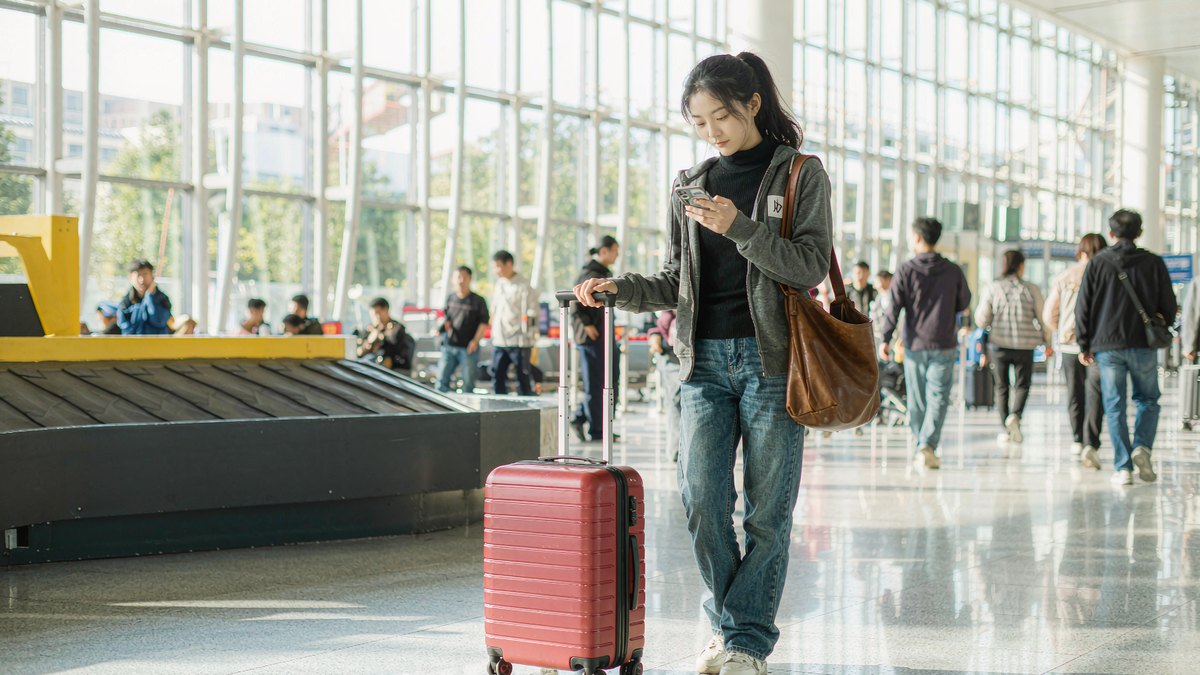
A tourist arriving in Singapore has two products to choose between, and they are not variations of each other. One is a travel eSIM bought from an international provider: data only, no paperwork, working before you land. The other is a locally registered prepaid eSIM from Singtel, StarHub or M1: more data than you can use, a +65 number, regional roaming, and a passport check that ties the line to your identity for exactly 30 days.
Everything confusing about Singapore eSIM advice comes from mixing those two up. A guide that recommends “the S$12 tourist SIM” to someone flying home in six days is wasting their evening. A guide that recommends a $10 travel plan to someone staying six weeks is selling them a line that dies mid-trip. This page sorts the decision, then walks through both purchases with the timing that actually matters.
If you only read one paragraph: a trip of up to two weeks, city and Sentosa, no calls home to Singapore numbers — buy a travel eSIM before you fly and skip the arrival hall entirely. A trip of two weeks or more, or one that needs a +65 number, or one continuing into Malaysia, Indonesia or Thailand — buy a local prepaid eSIM, expect a passport check, and plan for the 30-day ceiling.
Three rules that override everything else: Every locally sold prepaid line in Singapore, physical or eSIM, requires passport registration before it works, and passport-registered lines expire after 30 days with no refund on the balance. Each passport can register three lines across all operators, and the minimum age is 15. International travel eSIMs avoid all of this because they attach as roaming guests. Singtel’s hi!Tourist tiers run S$10 to S$30 for 500–700 GB with regional roaming; StarHub and M1 undercut on specific trip shapes. And buying a local eSIM three weeks before you fly can start the clock before you land.
Which Singapore eSIM tourists buy, by trip length
The decision is easier once you recognise which traveller you are, because the trip length and the need for a phone number do all the work.
The holidaymaker, four to ten days, city plus Sentosa. Data only, no calls, no paperwork. A Singapore travel eSIM of 5–10 GB at $10–16 is the correct purchase, and it is the largest group of visitors by far. The tourist eSIM Singapore visitors can install at home without showing anyone a passport is the same product — there is no separate tourist edition, only a shorter validity and a smaller allowance.
The stopover or cruise passenger, six hours to three days. A Singapore eSIM for tourist use does not need to be large: 1 GB is enough for a stopover that stays near the airport. You may not even leave the airport, or you may have one afternoon in the city before boarding. Data consumption is small, the willingness to queue is zero, and a 1–3 GB travel eSIM Singapore visitors buy in advance covers the whole visit.
The long-stay visitor, two weeks to a month. A local prepaid eSIM starts to win, because the 500 GB allowance costs less than a mid-tier travel plan and the regional roaming covers the side trip to Johor or Batam. Just accept the 30-day registration clock.
There is a fourth group worth naming because they are badly served by most guides: the visitor staying more than 30 days on a tourist visa extension, a family visit, or a work trip that has not yet produced an employment pass. Their line will be suspended at day 30 regardless of what they paid, and the fix is a travel eSIM with a longer validity or a second registration with a Singapore-issued pass. Nothing else works, and no carrier will make an exception.
| Traveller | Best purchase | Typical price | Paperwork |
|---|---|---|---|
| Holiday, up to 2 weeks | 5–10 GB travel eSIM | $10–16 | None |
| Stopover, under 3 days | 1–3 GB travel eSIM | $4–7 | None |
| Two weeks to a month | Local prepaid eSIM or 20 GB travel plan | S$10–15 or ~$21 | Passport, if local |
| Needs a +65 number | Local prepaid eSIM with calls | S$10–15 | Passport |
| Staying past 30 days | 30-day travel plan, renewed | $16–31 per cycle | None |
What “prepaid” actually means on a Singapore eSIM
In most countries “prepaid” simply means you pay up front and there is no contract. In Singapore it means something more specific, and the extra meaning is what expires.
A locally issued prepaid line is a registered subscription: the carrier records your passport number against the SIM or eSIM profile, because every prepaid line in the country must be identifiable. That registration is what allows the line to exist, and it is also what limits it. Since 15 July 2024, a line registered on a foreign passport is valid for a maximum of 30 days. When that window closes the line is suspended, the credit is not refunded, and re-registration requires a Singapore-issued identity card, employment pass, student pass or similar — documents a tourist does not carry.
Three consequences that catch people out:
Top-ups do not extend the registration. You can add credit to a prepaid line and still lose it on day 31, because the constraint is the identity registration, not the balance.
The three-line cap is per passport, across all operators. Singtel, StarHub and M1 share the limit. Data-only variants are excluded from the cap at M1, which is why that specific product is popular with returning visitors.
Re-entry does not restart the clock. Leaving for a week in Bali and coming back does not give you a fresh 30 days on the same line.
An international travel eSIM has none of this because it is not a Singapore subscription at all. It is a roaming profile issued abroad, attaching to a local network as a guest. No passport, no registration, no 30-day ceiling — the plan lasts as long as the seller says it does, whether that is three days or six months.
That single structural difference is the whole decision. Everything else is price and convenience.
What 500 GB means when you will use five
The number at the top of every Singapore tourist pack is 500 GB. Nobody uses 500 GB. Understanding why the number exists tells you how much of the pack you are actually paying for, and whether the tier above is worth two more dollars.
A 500 GB allowance over 30 days is roughly 16 GB a day sustained, which is about ten hours of HD video every day for a month. On a phone. On an island where every mall hands out free Wi-Fi. The allowance is not a data product, it is a marketing device that removes the question “is this enough” from the sale, because the answer is always yes.
What you are actually buying, in order of real value:
- A registered line and a +65 number. Worth S$8–10 on its own to anyone who needs calls or SMS verification.
- Regional roaming. 12 to 80 GB of APAC data is the genuinely differentiated part of these packs, and the reason a Singapore purchase can carry a whole Southeast Asia trip.
- A stable local data connection on one carrier’s network, with the congestion that implies.
- The headline allowance, which you will use a single-digit percentage of.
Once you see it that way, the tier comparison stops being about gigabytes. S$12 versus S$15 is not 500 GB versus 500 GB — it is 12 GB of APAC roaming versus 18 GB including China, Japan and Korea, plus 5G+ on the local network. That is a real product difference for three dollars.
| What you use in a week | Realistic total | Share of a 500 GB pack |
|---|---|---|
| Maps, Grab, messaging, photos | 4–6 GB | ~1% |
| Plus social video | 8–12 GB | ~2% |
| Plus daily video calls | 15–20 GB | ~4% |
| Plus streaming instead of hotel Wi-Fi | 25–35 GB | ~6% |
The takeaway is not that the packs are dishonest. It is that you should choose between them on the roaming, the validity and the number, and treat the local data allowance as irrelevant beyond the first gigabyte. Anyone ranking these tiers by local gigabytes is ranking decoration.
What prepaid eSIM Singapore carriers actually sell
The local carriers have converged on a similar shape: an enormous local data allowance, a slice of regional roaming, some calls, and 30 days. The differences are in the roaming mix and the validity, and those matter more than the headline gigabytes.
| Product | Price | Local data | Regional roaming | Validity | Calls |
|---|---|---|---|---|---|
| Singtel hi!Tourist | S$10 | 500 GB | Limited | 7 days | Unlimited local |
| Singtel hi!Tourist | S$12 | 500 GB | 12 GB APAC plus 3 GB worldwide | 30 days | Unlimited local |
| Singtel hi!Tourist | S$15 | 500 GB, 5G+ | 18 GB APAC incl China, Japan, Korea, plus 8 GB worldwide | 30 days | Unlimited local |
| Singtel hi!Tourist | S$30 | 700 GB, 5G+ | 80 GB APAC plus 15 GB worldwide | 30 days | Unlimited local |
| StarHub Traveler | from S$12 | 100 GB | ~3 GB across 20 destinations | 10–14 days | Variant dependent |
| StarHub Traveler unlimited | S$30 / S$50 | Unlimited, fair use 100 GB / 150 GB | Included | 28 days | Variant dependent |
| M1 Tourist | S$12 | 100 GB | 3 GB APAC | 15 days | 500 local mins plus 30 IDD |
| M1 Tourist data-only | S$13 | 500 GB | 20 GB APAC plus 7 GB worldwide | 30 days | None |
Figures from carrier pages in October 2026, in Singapore dollars. Allowances change with promotions; check the tier before you pay. The S$8 Singtel hi! SIM is not available for airport collection.
Which tier to take
S$10, seven days, 500 GB is the best-value short-trip product in Singapore and is routinely sold out at some airport counters. If your trip is under a week and you want a number, this is the answer, and the missing regional roaming does not matter because you are not leaving.
S$12, thirty days is the eSIM Singapore tourists end up buying most often, and it adds the roaming slice that makes a Malaysia or Batam day trip free, and triples the validity for two dollars. For anything longer than a week it is the default local buy.
S$15, thirty days, 5G+ is the tier to take if you are continuing to Japan, Korea or China, because 18 GB of APAC roaming covers those legs at a price no combination of three travel plans can match.
S$30, 700 GB is a working-visit product. Nobody sightseeing needs 700 GB; somebody running a hotspot for a family of four for a month might.
StarHub from S$12 is the cheaper route for a longer stay that stays inside Singapore, with the trade that the registration clock and the activation window are both 30 days or less and the eSIM must be activated within 18 days of purchase.
M1 S$12, fifteen days is the only genuine short-validity product, and M1 publishes the tier on its tourist SIM page with calls, which suits a ten-day trip that needs a number without paying for 30 days. The S$13 data-only eSIM is cheaper per gigabyte still, but its instant-activation variant requires Singpass, so visitors take the pickup version.
Buying the Singtel prepaid eSIM, step by step
The sequence matters more than the steps, because two clocks run in parallel and only one of them is obvious.
- Buy online within a few days of flying. Singtel states that validity starts at purchase, so a purchase three weeks early is three weeks of a 30-day plan spent at home.
- Keep the confirmation email accessible offline. Screenshot the QR or the redemption code. This is the single document you cannot retrieve if your phone is the thing that is offline.
- Register the day before arrival. Registration needs your passport and a selfie, done in the hi!App. The plan activates on registration, which is the reason not to do it in advance.
- Install the profile on Wi-Fi at home. Scan the QR, label the line, and leave it switched off.
- Switch it on after immigration. Not on the aircraft, not in the airside lounge. On the ground, after you clear.
- Confirm voice and SMS are enabled. Singtel notes that calls and SMS may need enabling at a retailer with passport verification. If your plan includes calls and they do not work, that is the reason, and it is a five-minute fix at any Singtel shop rather than a reinstall.
The trap buried in that sequence: the eSIM must be registered within 90 days of purchase or it expires, while the plan’s own validity starts at purchase. Two different clocks, both real. The safe practice is buy late, register the day before, and if you must buy early, ask the seller in writing when the 30 days begins.
If registration fails
Two common failures, both fixable before you fly.
The passport photo is rejected. Glare, a shadow across the data page, or a photo of a photocopy. Retake in daylight against a plain background, with all four corners visible.
The selfie does not match. Beards, glasses and hats cause more rejections than people expect. Take it without accessories in the same light as the passport photo.
If both fail twice, do not keep retrying on airport Wi-Fi. Buy a travel eSIM as a fallback for arrival day, sort the local line in town at a Singtel shop where a human can look at the documents, and treat the S$12 as tuition.
If you land at 1 am: counters, trains and Grab
Late arrivals are where the prepaid route falls apart and the travel eSIM route looks clever.
Counters. Most Travelex, Prosegur and Changi Recommends counters in Terminals 1–4 are open 24 hours; the convenience-store counters, including Cheers in T2 and T3, are not. A 1 am arrival at T3 usually still has a Travelex counter running near the belts, but the queue is one person deep at best because there is one staff member.
Trains. The MRT does not run all night. First trains are around 5:30 am and the last ones leave the city for the airport shortly before midnight. A 1 am arrival is a taxi or Grab, not a train.
Grab at 1 am. Works, with surge pricing and a longer wait. The pickup points are signposted per terminal; at T1 the ride-hail pickup is in the arrival level car park, not at the taxi stand. This is the moment when having data already working is worth more than the $6 you saved.
The honest recommendation for red-eyes: install a travel eSIM before you fly even if you plan to buy local later. The 1 GB tier at $4 buys you a functioning arrival, and you can still register a local line the next morning in town with a passport and no queue.
Stopovers: six hours at Changi without leaving airside
Singapore is a connection hub, and a large share of “Singapore tourists” never clear immigration. If you are transiting, three facts change the calculation.
You may not be able to install anything on arrival. Airside Wi-Fi at Changi is free and reliable, so installation is possible, but the QR code is in an email you may not be able to reach without data. Install before you leave home.
A local prepaid eSIM is not available to you. Registration requires clearing immigration. If you are staying airside, a travel eSIM is the only option, which settles the decision.
If you do clear immigration for a few hours, the calculus flips: a 1 GB travel plan is enough for Jewel, the MRT into the city and back, and a meal, and it costs less than a coffee at the airport.
| Stopover length | Worth clearing immigration? | Data needed |
|---|---|---|
| Under 4 hours | No | Airside Wi-Fi, eSIM as backup |
| 4–8 hours | Yes, for Jewel and one hawker centre | 500 MB–1 GB |
| 8–24 hours | Yes, city and a meal, or a transit hotel | 1–3 GB |
Cruise passengers at Marina Bay and HarbourFront
Cruise arrivals land at Marina Bay Cruise Centre or HarbourFront Centre, not at Changi, and both are a short MRT ride from the city. Two practical notes.
There are no carrier counters at the cruise terminals. If you have not arranged data before boarding, your first connection is whatever the terminal Wi-Fi gives you, which is enough to buy an eSIM online but not enough to register a prepaid line.
Cruise Wi-Fi and mobile data at sea are different problems. A Singapore eSIM gives you nothing once the ship leaves territorial waters; the ship’s own package or a regional roaming plan is the answer there. Plan Singapore data for the days in port, not for the sea days.
Travelling with children and older parents
A prepaid eSIM Singapore families buy for the adults also covers the teenager problem, because a data-only travel profile on a child’s phone needs no registration at all. Two constraints show up only with family groups.
The age-15 rule. A prepaid line cannot be registered on a child’s passport. If a teenager needs their own connection, a data-only travel eSIM is the only route, and it is a better one anyway — no registration, no number to manage, no risk of a child’s identity document sitting in a carrier’s records.
Older parents and voice calls. If a parent needs to make actual phone calls — to a hotel, a clinic, an airline — a data-only plan is not enough, and WhatsApp calling only works when the other end has the app. This is the one case where the local prepaid eSIM with local minutes earns its paperwork, and S$10 for a week is cheap insurance.
One hotspot is not a family plan. Two phones tethered to one handset drains the battery fast, and a group that splits up loses the connection with the hotspot holder. Two small travel plans cost about the same and fail less.
Three tourists, three purchases, costed
The abstract advice lands better with numbers attached. Three itineraries, each with the products that actually fit and what they cost end to end.
The four-day couple from Sydney
Two travellers, one phone each, Marina Bay and Sentosa, no laptop, no calls to Singapore numbers.
The purchase: two 3 GB travel eSIMs at about $6.50 each, installed at home. Total $13.
Why not local: a S$12 pack each would cost about $18.50 for two, plus twenty minutes at a counter after an overnight flight, plus two registered lines that expire 30 days later. The travel eSIM saves money and time on this trip.
What they use: roughly 2.5 GB each over four days, with hotel Wi-Fi carrying the evening streaming. They finish with about 500 MB spare, which is the right amount of spare.
The twelve-day family of four from Manchester
Two adults with phones, two teenagers with phones, one tablet, one laptop for a parent who checks email twice a day.
The purchase: two 10 GB travel eSIMs at about $14 each for the adults, two 5 GB plans at $9.99 for the teenagers, and the tablet stays on Wi-Fi. Total about $48.
Why not local: a single S$30 700 GB pack with hotspot would cost about $23 and cover the family, but tethering three devices to one phone for twelve days is a battery and patience problem, and two of the four users would be offline whenever the group split up. The extra $25 buys four independent connections.
What they use: adults 8–9 GB each, teenagers 4–4.5 GB each, driven by social video rather than maps. The laptop stays on hotel Wi-Fi.
The three-week visitor from Berlin on a work-and-holiday trip
One traveller, one phone, a laptop for video calls four days a week, continuing to Kuala Lumpur in week three.
The purchase: Singtel hi!Tourist at S$15, about $11.55.
Why local: the 18 GB of APAC roaming includes Malaysia, so the Kuala Lumpur leg costs nothing extra. The local 500 GB allowance carries hotspot for video calls without a 1 GB/day cap. The +65 number covers a clinic appointment and a restaurant that insisted on a local number. At three weeks, the registration overhead is amortised to nothing.
What they use: 12–15 GB of local data, 6 GB of Malaysian roaming, and about 40 minutes of local calls. The line suspends at day 30, four days after they fly home, which is exactly right.
| Itinerary | Purchase | Cost | What it buys |
|---|---|---|---|
| 4 days, couple | Two 3 GB travel eSIMs | ~$13 | No queue, no paperwork |
| 12 days, family | Two 10 GB plus two 5 GB | ~$48 | Four independent lines |
| 21 days, one traveller | Singtel hi!Tourist S$15 | ~$11.55 | Roaming, hotspot, a number |
The pattern that runs through all three
Short trips buy convenience. Long trips buy a line. Families buy separate plans rather than a hotspot. Nobody needs the headline allowance, and the decision that actually matters is whether the trip crosses a border or needs a phone call.
What a tourist actually opens in the first week
Understanding which apps need data explains the data number better than any allowance table.
| App | Needs data | Notes |
|---|---|---|
| Google Maps | Yes, 5–10 MB per hour | Download the city offline as a backup |
| Grab | Yes, chatty | Ride-hail pickup points are signposted per terminal |
| MyTransport.SG or Citymapper | Yes, small | Bus and MRT arrival times |
| Yes, small | The default messaging app for most visitors here | |
| Klook, Pelago, attraction apps | Yes, at the gate | Screenshot QR codes in advance |
| Banking apps | Yes, on launch | Some want an SMS to your home number |
| PayNow, NETS | No | Not available to tourists without a local account |
| Contactless card for MRT | No | Works at every fare gate |
The last two rows are the useful ones. PayNow is not a tourist payment method — it requires a Singapore bank account — so do not plan around it. And the MRT takes contactless bank cards directly, which means you do not need a local SIM, an EZ-Link card or a tourist pass to move around the city. A lot of visitors buy a local SIM specifically for transport and then discover they never needed it.
Where a local number does earn its keep: a hotel that wants to call you, a clinic, a delivery, a restaurant reservation, and any app that verifies by SMS to a Singapore number. That list is shorter than most guides imply.
What breaks in the first 48 hours, and what each symptom means
The eSIM shows bars but no internet. Nine times in ten the phone is still routing data through the home SIM. Check which line is selected for mobile data before anything else.
“No Service” that never resolves. On a travel eSIM, this is usually a provisioning failure and support should be told immediately. On a local eSIM with a 4G non-VoLTE handset, it may be the phone — Singapore has no 3G to fall back on.
Data works, voice does not. Expected on data-only plans, and fixable on Singtel prepaid by asking a retailer to enable calls and SMS with passport verification.
The line dies on day 31. The registration expired. Nothing restores it without a Singapore-issued pass; buy a travel eSIM for the rest of the stay.
Slow speeds at a specific place, every day. Congestion, not a fault. Sentosa at 4 pm, the Marina Bay basement at lunch, any stadium on an event night. Switching networks helps if your plan can; waiting helps if it cannot.
A top-up that does not appear. Some prepaid top-ups need the line to be in Singapore to apply. Do it in the country, on the local line, not from the departure lounge.
What happens if you buy the wrong one
Nobody gets this perfect the first time, and the recovery is cheap if you know the order of operations.
You bought a data-only plan and need a number. Do not buy a second data plan. Go to a Singtel, StarHub or M1 shop with your passport, take the cheapest prepaid tier that includes calls, and run it as a second line for the rest of the trip. Your data plan keeps working in parallel, which is the advantage of eSIM over a physical swap.
You bought a local pack and the registration will not verify. Buy a travel eSIM as the working line for arrival day, and sort the local registration in town where a staff member can look at the documents. Two failures on an app at 1 am is the point to stop retrying.
You bought a 30-day plan for a 45-day stay. Nothing fixes the line after day 30 without a Singapore-issued pass. Buy a fresh travel eSIM for the remainder, sized to the days left, and treat the local pack’s remaining balance as gone — it is.
You bought the wrong network. Not a real problem in Singapore. All four networks cover the island, and the only place it shows is Mandai, Ubin and offshore islands. Do not buy a second plan for a 15% signal difference in a place you will visit once.
You bought two plans by accident. Most providers will not refund a plan that connected once. Use it as your second line for a laptop hotspot and stop thinking about it; the loss is $10, not a crisis.
| Mistake | Cost of the fix | Better move |
|---|---|---|
| Data-only when you needed calls | ~S$10 for a prepaid line | Run both, don’t cancel |
| Local registration stuck | $4–7 for a fallback plan | Fallback first, fix in town |
| Plan shorter than the stay | One more plan, prorated | Buy validity for the whole stay |
| Wrong network | $10–16 for a replacement | Accept it unless you go rural |
| Duplicate purchase | Nothing | Use it as a hotspot line |
The 24-hour rule
If something is going to go wrong, it goes wrong in the first 24 hours, while you are still near an airport or a carrier shop with staff. Give the line one honest hour of testing on arrival day — attach, load a map, tether a device, make a call if the plan includes calls — and fix it that day rather than on day four from a hotel in Tiong Bahru.
Questions tourists ask about Singapore prepaid eSIMs
Can I buy a Singapore eSIM at Changi Airport? Yes, at Travelex, Prosegur and Changi Recommends counters in Terminals 1–4, most open 24 hours, plus the carrier shops in the terminals. You need your passport. The queue is the slow part, not the process.
Is a prepaid eSIM Singapore’s best option for a two-week stay? Usually yes: a S$12 pack carries 500 GB, APAC roaming and a +65 number for less than a 20 GB travel plan, and the registration overhead is amortised over fourteen days.
Do I need a passport to buy a tourist SIM or eSIM in Singapore? Yes, for anything locally issued. Registration is compulsory by law and the line will not activate without it. International travel eSIMs are exempt because they are not local subscriptions.
How long does a Singapore tourist eSIM last? A passport-registered local line lasts 30 days maximum, then suspends without refund. A travel eSIM lasts whatever the plan says, from 3 to 180 days. This is the number to compare before buying.
Is a Singapore prepaid eSIM cheaper than a travel eSIM? Per gigabyte, dramatically — about fifteen times. In total, for a week, they are within a few dollars of each other once you count the counter time and the unused allowance. For two weeks or more, local wins on price and roaming.
Can I use a Singapore eSIM in Malaysia? Only if the plan includes regional roaming. Singtel’s S$12 and above tiers, StarHub’s Traveler tiers and M1’s tourist packs include Malaysia data. Most Singapore-only travel eSIMs do not, so a day trip to Johor Bahru needs either a roaming bundle or a second plan.
Does a Singapore eSIM work for Grab? Yes — Grab needs data, not a local number. Registration with a foreign number works, and drivers message through the app rather than by SMS.
Can I keep my home number while using a Singapore eSIM? Yes. That is the main argument for eSIM over a physical swap: your home SIM stays in the phone for calls and bank codes while the local profile carries data.
What if my phone is not eSIM compatible? You buy a physical tourist SIM, register it with your passport, and accept the counter queue. The data and pricing are the same; only the delivery differs.
Is 5G worth paying extra for in Singapore? No, because nothing here charges extra for it. All four networks carry 5G and most plans allow it where the handset supports the bands. The practical difference over 4G is small on an island this well covered.
What to do 24 hours before you fly
Six items, in order, and then you can stop thinking about connectivity.
- Dial
*#06#and confirm an EID appears. No EID means no eSIM, and you should be buying a physical SIM instead. - Update the phone’s operating system. Provisioning bugs on old builds are the most common installation failure, and they are invisible until you try.
- Buy the plan, install the profile on Wi-Fi, label the line, leave it off.
- If you are going local, complete registration in the carrier app the day before arrival, not three weeks earlier.
- Download an offline map of Singapore, and screenshot every QR code you already hold — attractions, hotel, boarding pass.
- Save your provider’s support link and order number somewhere that is not the phone. If the phone is the problem, you need a second device to complain with.
For the country-level detail behind these choices — the networks, the VoLTE requirement, the Changi counter map and the price ladders side by side — the country-level reference page covers the rest. If you are still choosing between brands rather than between purchase types, the provider scoring ranks eight of them, and tier arithmetic and break-evens handle the money. For the physical-card route at the airport, the SIM card versus eSIM comparison walks the counters terminal by terminal, and if the plan must include a local number, the Singapore number guide covers what registration actually gets you.